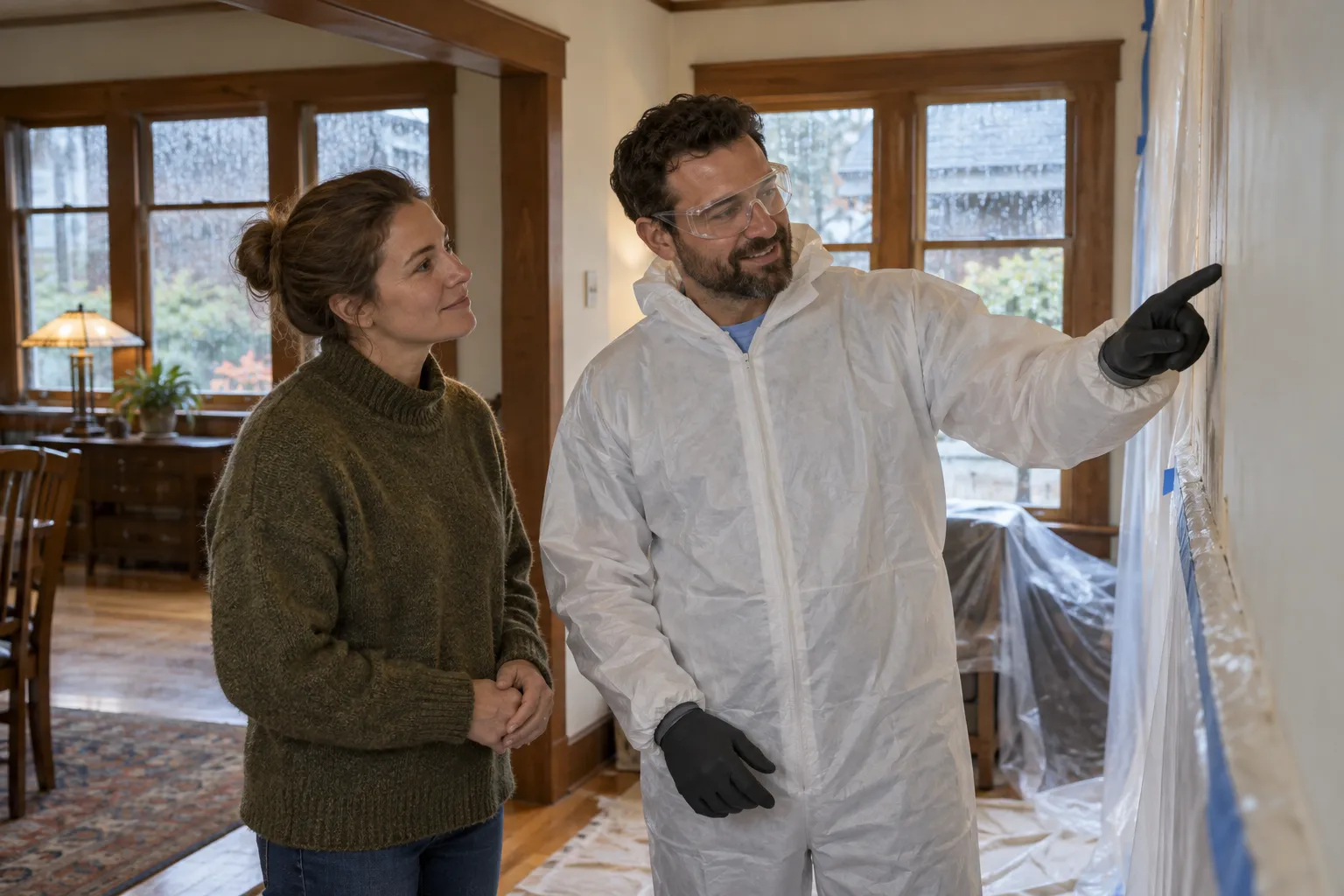
Finding mold in your home can feel like a big, scary problem. It does not have to be. Mold remediation is the careful process of containing, removing and cleaning up mold, then fixing the damp problem that let it grow. Independent providers in our network do this work, not Marioopposed Mold Help.
This page explains what the work involves, what it may cost, and how to choose a provider you feel good about. In the Portland area, long wet seasons and damp wood-frame homes make mold common. Doing the job right helps protect the home, its condition and its future resale value. Take your time, read on, and pick your next step.
Found Mold? Take a Breath, Then Start Here
Dark spots on a wall. A musty smell in the closet. It is upsetting, and it is also very common in damp climates. You do not need to solve everything today. You need one clear step.
If you can, keep people and pets out of the affected room. Do not scrub the spots, spray bleach, or aim a fan at them. Those moves can push spores into other rooms. Request a callback to check provider availability near you.
Why Mold Keeps Growing If You Wait
Mold needs moisture, a food source and time. Wood, drywall and insulation give it plenty to eat. Once it settles in, it spreads into hidden spaces behind walls and under floors.
A small patch you can see may be bigger than it looks. The longer it grows, the more material may need to be removed. Acting early often keeps the job smaller.
What About Black Mold?
Many people search for black mold remediation because the dark color looks alarming. Color alone does not tell you how risky a patch is. Many mold types look dark.
The safer move is to treat any widespread growth with care. A provider can look at it, explain what they see, and suggest a plan that fits your home.
What Residential Mold Removal Usually Includes
Every job is different, but most follow a similar path. A provider will check how far the mold has spread and find where the moisture is coming from. Then they set up protection, remove or clean affected materials, and dry the area.
After that, they clean the surrounding surfaces and air. Some jobs end with a check to see that the work did its job. Ask each provider to explain their steps in plain words.
Why Containment Matters So Much
Mold spores are tiny and light. Careless cleanup can send them through the whole house. That is why providers often seal off the work area with plastic sheeting and use air filtration and gentle negative pressure.
This keeps the problem in one place. It also protects the parts of your home that are still clean, which protects their value too.
Fix the Water, Not Just the Mold
Removing mold without fixing the moisture is like mopping with the tap running. The mold will come back. A good plan names the source, such as a roof leak, a dripping pipe, poor airflow or damp soil under the house.
Sometimes the repair is small. Sometimes it needs a roofer, plumber or drainage specialist. A remediation provider can often point you in the right direction.
Crawl Spaces and Older Wood-Frame Homes
In rainy regions, crawl spaces stay damp for months. Older craftsman houses may have aging seals, small gaps and wood that holds water. Newer townhomes can trap humid air in tight spaces.
These homes are not doomed. They simply need closer attention to airflow, drainage and vapor barriers. Ask providers how they handle your type of home.
Timing the Work Around the Seasons
The wet season feeds mold. Steady rain, mild temperatures and windstorms that loosen roofing or siding all raise the risk. Many homeowners plan work before the rains so repairs have time to dry and settle.
If mold is already active, do not wait for a perfect season. Request an estimate now, and let the provider suggest the right timing for your home.
Insurance and Paperwork
Some policies may cover sudden damage, such as a burst pipe. Mold from slow leaks or long-term dampness is often treated differently. Check your policy and ask your insurer what applies.
Providers can often help document damage for a claim. Take dated photos before anything is moved, and keep every written quote and receipt.
How to Choose a Remediation Provider
Good providers are happy to answer questions. Ask what the plan covers, how they contain the area and how they handle the moisture source. Ask whether they use certified mold testing when it is needed, and who does it.
Get the scope, price and timeline in writing. Be careful with anyone who pressures you or will not explain the work. If you searched mold inspection near me, know that testing is its own step with its own page.
Protecting the Home and Its Value
Buyers and inspectors notice mold history. Clear records of the cleanup, the moisture repair and any follow-up checks can help show that the problem was handled well.
Keep your paperwork in one folder. It supports future resale and gives you peace of mind today.
After the Work Is Done
Once the job is finished, keep the home dry. Run exhaust fans, fix leaks quickly, clean gutters and keep indoor humidity steady. Check the crawl space and corners after heavy rain.
If you see a musty smell or new spots, act early. A small problem caught fast is much easier to manage.
What's Included
Careful Mold Removal
Providers remove or clean affected materials using safe methods that avoid spreading spores to the rest of the home.
Sealed Work Areas
Plastic barriers and air filtration help keep spores in one room while the cleanup is underway.
Drying
Fans and dehumidifiers dry the space so mold has less moisture to return.
Moisture Source Advice
Providers look for the cause, such as leaks or poor airflow, and explain what repairs may be needed.
What Mold Remediation May Cost
Prices depend on the size of the problem, the materials involved and how easy the area is to reach. These are typical U.S. ranges only. Always get a written quote before work starts.
| Item | Typical range | Notes |
|---|---|---|
| Small area cleanup | $500 – $1,500 | One wall or a small patch in an easy spot |
| Bathroom or bedroom | $1,000 – $3,500 | Depends on drywall and flooring removed |
| Crawl space treatment | $1,500 – $6,000 | Size, access and moisture level matter |
| Attic mold cleanup | $1,500 – $6,500 | Insulation and roof decking can add cost |
| Whole-home remediation | $10,000 – $30,000 | Widespread growth across several rooms |
| Moisture repair | $300 – $5,000+ | Leak fixes or drainage work, priced by the repair trade |
How It Works
Share Your Situation
Tell us where you see mold and what you have noticed, such as smells or recent leaks.
Connect With a Provider
We pass your request to an independent local provider who can look at the problem.
Review the Written Plan
Compare the scope, price and timeline, and ask any questions before you agree.
Choose Your Next Step
Pick the provider you trust, and let them schedule the work.
Why Call Marioopposed Mold Help
Local Providers
Independent providers in our network know the damp climate and the wood-frame homes common in your area.
Plain Answers
Learn what the work involves in simple words before you decide on anything or speak to a provider.
No Obligation
Request an estimate, compare your options and decide at your own pace, with no pressure.
Home Focus
Every step aims to protect the home, its condition and its value.
Other Services
Need mold remediation services in Portland?
Tell us what you are seeing at home. Request a callback to check provider availability, or send a request and we will point you to a local provider.
No obligationMold Remediation Services FAQ
How do I know if I need mold remediation?
Widespread growth, a lasting musty smell, or mold that returns after cleaning are common signs. A local provider can look at the area and tell you whether remediation or a simple cleanup makes more sense.
Can I remove mold myself?
Very small surface spots on hard materials can sometimes be cleaned carefully. Larger areas, mold on drywall or wood, or growth in hidden spaces is better left to a provider, so spores do not spread.
Will mold come back after remediation?
It can if the moisture source is not fixed. Ask your provider about leaks, drainage and airflow, and keep the home dry afterward. Fixing the cause is what keeps the problem from returning.
Reach a local provider
Tell us what you are seeing at home. Request a callback to check provider availability, or send a request and we will point you to a local provider.
No obligation