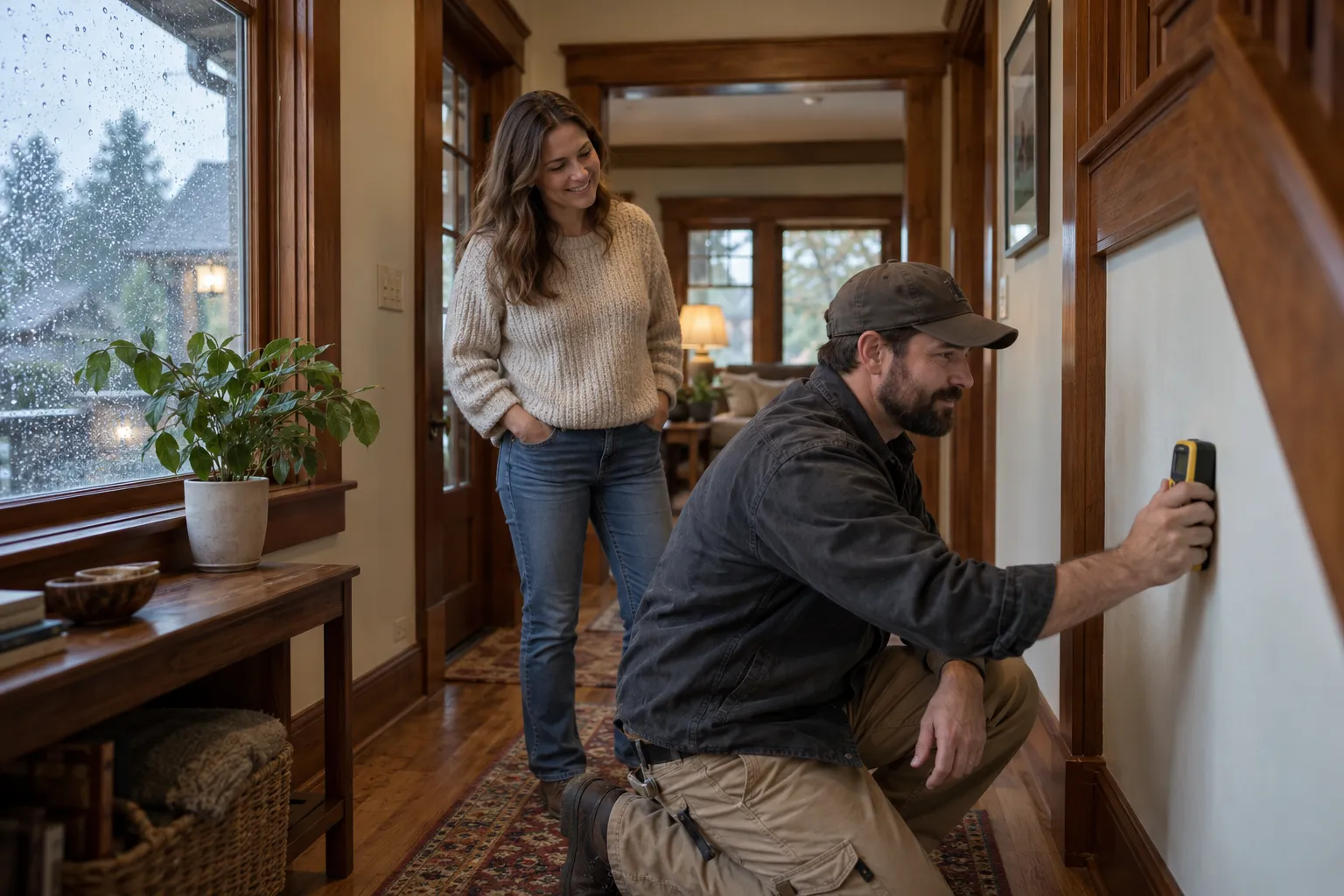
Finding a musty smell or dark spots at home is stressful. A mold inspection replaces guessing with facts. An independent provider looks at your home, finds moisture sources, and explains what they see in plain words.
Marioopposed Mold Help is a referral service. We do not inspect or test anything ourselves. We connect you with local providers in our network who do. Many offer certified mold testing and can take air or surface samples when it makes sense. Request a callback to check provider availability, or request an estimate with no obligation. Either way, you take one clear step to protect the home.
Think You Have Mold? Start Here
Take a breath. A musty smell or a dark patch is a reason to look closer, not a reason to panic. Most mold problems can be handled once you know what you are dealing with.
If you searched for mold inspection near me, you probably want a clear answer. An inspection gives you that. A local provider checks the home, finds where moisture is getting in, and tells you what they see.
Signs That Need a Look First
Some signs deserve attention sooner than others. Start with these:
- Water leaks, burst pipes or flooding that has not fully dried
- A strong earthy smell that comes back after cleaning
- Dark or fuzzy spots on walls, ceilings or window frames
- Health symptoms that ease when you leave the house
- Peeling paint, warped wood or bubbling drywall
If water is still flowing in, ask a plumber or roofer to stop it first. Mold keeps growing as long as moisture stays.
When an Inspection Makes Sense
An inspection is a smart move after any water event. It also helps when you buy or sell a home. Buyers like to see a clean report. Sellers who fix problems early protect the home's value.
It also makes sense when you smell mold but cannot see it. Hidden mold often sits behind walls, under floors or in attics.
What Happens During a Mold Inspection
The provider starts by listening. They ask where you saw water, when you noticed the smell and who feels unwell. Then they walk through the home.
Expect them to check:
- Walls, ceilings and floors for stains or soft spots
- Attic, basement and crawl space
- Around windows, sinks, tubs and appliances
- Humidity levels with a moisture meter
They may use a thermal camera to spot damp areas you cannot see. Most visits take a few hours, depending on home size.
Types of Mold Testing
Not every inspection needs lab tests. A provider will suggest what fits your case. Common options include:
- Air samples: compare mold spores inside to outdoor air
- Surface samples: swabs or tape lifts from a visible spot
- Bulk samples: a small piece of material sent to a lab
Certified mold testing means a trained provider follows set sampling steps and uses an accredited lab. Ask the provider about their training and lab before you book.
Understanding Your Results
A lab report lists the types of mold found and how much. It can look like a wall of Latin names. A good provider walks you through it in simple terms.
You may hear about black mold. The dark color alone does not tell you the type. Only a test can confirm it. If black mold remediation is needed, the report helps a provider plan the right steps.
What the Report Should Tell You
Look for these points in your written report:
- Where the mold is and how far it spreads
- What caused the moisture
- Whether cleanup is advised
- Which fixes should come first
Keep a copy. It is useful for repairs, insurance questions and a future sale.
Inspection and Remediation: Separate or Together?
Some providers do both jobs. Others only inspect. Both setups can work well.
A separate inspector has no stake in selling cleanup. A combined provider may move faster. Either way, get the plan in writing. If you need residential mold removal later, ask for a written scope and a quote.
Why Seasons Matter Here
Long wet seasons keep wood, crawl spaces and siding damp for months. Steady rain, moss and mild temperatures help mold spread slowly and quietly.
Inspecting before the rains gives you time to fix gutters, vents and drainage. Checking after a windstorm can catch roof or siding damage early. Fall is a good time to look, but any season works if you suspect a problem.
Older Homes and Crawl Spaces
Older wood-frame and craftsman houses often have crawl spaces, old vents and settled siding. Newer townhomes can trap moisture in shared walls or tight spaces. A provider who knows these home types will know where to look.
How to Prepare for Your Inspection
A little prep helps the visit go smoothly:
- Write down when and where you saw water or smelled mold
- Clear access to the attic, crawl space and utility areas
- Gather past repair records or earlier reports
- Do not scrub or bleach the spot beforehand
- Keep windows and doors in their normal state
Questions to Ask the Provider
Good questions make for a better choice:
- What training and sampling methods do you use?
- Which lab handles the samples?
- Will I get a written report?
- How much does the visit cost, and what does it include?
- Do you also do cleanup, and is that quoted separately?
A calm, clear answer is a good sign.
Your Next Step
You do not need to solve everything today. Request a callback to check provider availability, or send a request for an estimate. Protect the home with one clear step.
What's Included
Visual Check
A provider looks over walls, ceilings, attic and crawl space for stains, soft spots and signs of moisture.
Moisture Readings
Meters and cameras help find damp areas behind surfaces that look dry from the outside.
Air and Surface Samples
Samples are taken when needed and sent to a lab for clear results.
Written Report
You receive findings in plain words, with the likely cause and suggested next steps.
What Mold Inspection and Testing Often Cost
Prices vary by home size, access and how many samples are needed. These are typical U.S. ranges only. Always ask each provider for a written quote before you agree to any work.
| Service | Typical range | Notes |
|---|---|---|
| Visual inspection only | $300 – $600 | Good for small or single-room concerns |
| Full home inspection | $400 – $1,000 | Larger homes cost more |
| Air sample (each) | $50 – $150 | Often paired with an outdoor sample |
| Surface or tape sample (each) | $30 – $100 | Used on visible spots |
| Lab fees | $40 – $150 per sample | May be bundled in the price |
| Crawl space or attic add-on | $100 – $400 | Depends on access and size |
How It Works
Share What You See
Tell us about the smell, stains or past leaks so a suitable provider can be matched.
Get Matched
Marioopposed Mold Help connects you with an independent provider in our network near you.
Schedule the Inspection
The provider visits, checks the home and takes samples if they are needed.
Review Your Written Report
Go over the findings and quote, then choose your next step with confidence.
Why Call Marioopposed Mold Help
Clear Answers
Testing replaces guesswork with facts, so you know what is growing and where before spending on repairs.
Protect Value
A documented report supports repairs and shows future buyers the home was cared for.
Right-Sized Plan
Findings help you fix only what is needed, instead of guessing at work.
Seasonal Timing
Knowing the cause lets you act before the rains and wet months return.
Other Services
Need mold inspection & testing in Portland?
Tell us what you are seeing at home. Request a callback to check provider availability, or send a request and we will point you to a local provider.
No obligationMold Inspection & Testing FAQ
How do I know if I need a mold inspection?
Consider one if you smell mustiness, see dark spots, or had a leak or flood that stayed damp. A provider can also check before you buy or sell. If unsure, ask a local provider what they suggest.
Is DIY mold testing worth it?
Store kits can show that spores exist, but spores are in every home. They rarely show the cause or the extent. A trained provider gives more useful, written results.
Will my insurance pay for a mold inspection?
Some policies may cover mold tied to sudden damage, such as a burst pipe, but many limit or exclude it. Check your policy, and ask the provider to help document the damage for a claim.
Reach a local provider
Tell us what you are seeing at home. Request a callback to check provider availability, or send a request and we will point you to a local provider.
No obligation